
Research projects

Fluency and Disfluency Features in L2

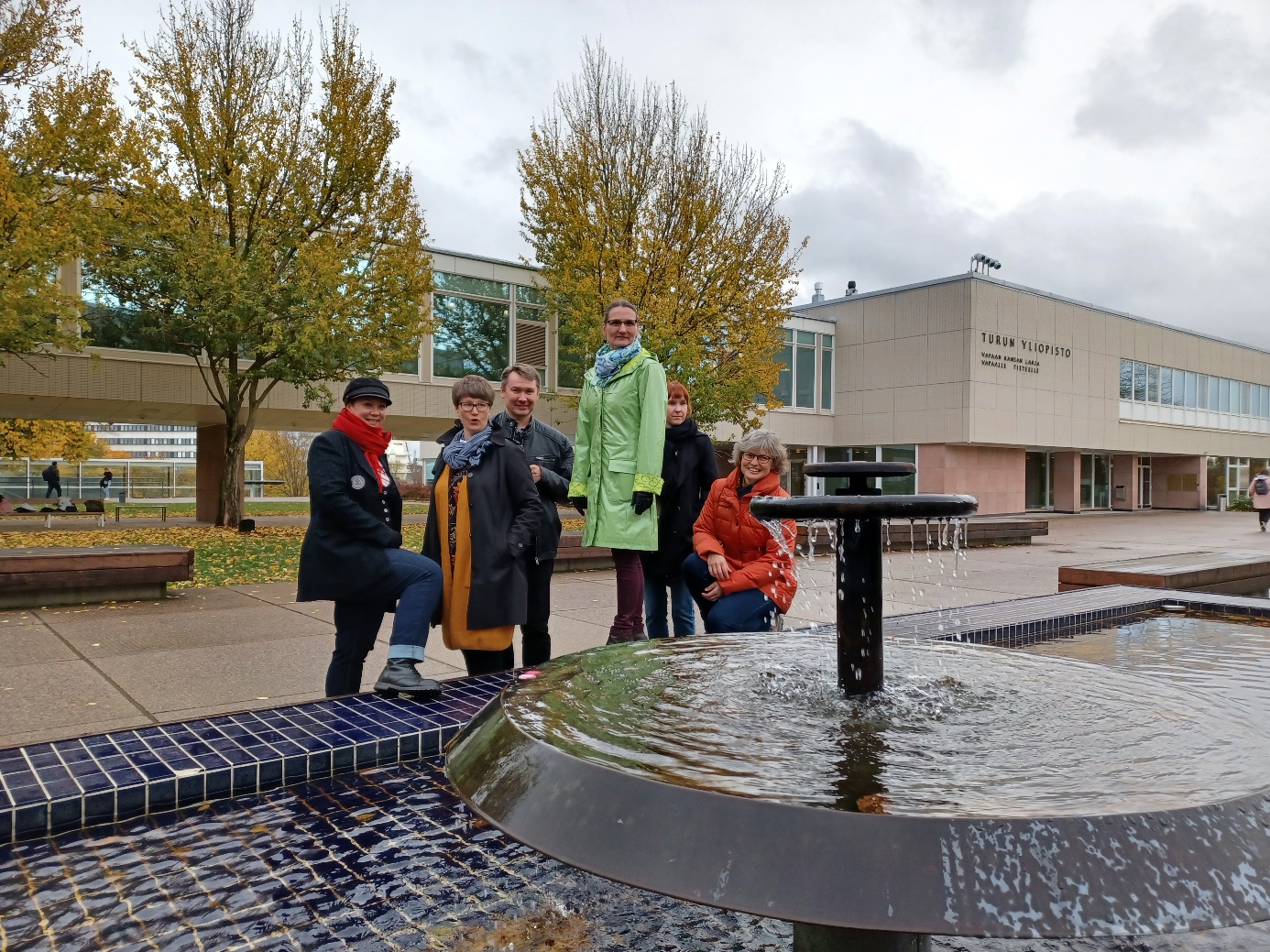
Uczestnicy projektu Fluency and Disfluency Features in L2 Speech

Dr Magdalena Szyszka conducts research on speech fluency in a foreign language. She participated in research work within the international project Fluency and Disfluency Features in L2 Speech (FDF2), conducted in Finland at the University of Turku, 2020–2024. The project is funded by the Academy of Finland (grant no. 331903). In 2022–2023, as part of the ‘ ’, Dr M. Szyszka coordinated research on affective factors in second language fluency (the affective factors work package).
Go to the project page


Repetitions in translation: a multidimensional descriptive-explanatory study

Opus 26 grant from the National Science Centre (2024–2026, 2023/51/B/HS2/00697) led by Prof. Łukasz Grabowski (KJA). Team members: Daniel Borysowski (UO), Jędrzej Olejniczak (UO), Marek Maziarz (PWr), Lorenzo Mastropierro (University of Insubria, Italy), Filip Kalas (University of Economics in Bratislava, Slovakia). The aim of the empirical research conducted on large text corpora is to describe the extent of repetition in translation, as well as to identify the factors contributing to it. No such translation studies have been conducted in Poland to date. The results of the research, grounded in corpus linguistics, statistics and natural language processing, will provide a better understanding of the role of repetition in translation, shedding new light on the complex factors underlying this phenomenon.

Read more on the NCN website

HUMLIT

“Developing an awareness of how humour works: an analysis of the creation, content and reception of humour to achieve positive change in the public sphere” (2025–2028, project ID: 101182860). The grant is funded by the European Union under the HORIZON-MSCA-2023-SE-01 call, involving collaboration between 23 partner institutions (15 academic and 8 non-academic) from 15 countries, including Poland; apart from the University of Opole, the only other Polish institution involved is the Jagiellonian University – the project coordinator. The project team at the Institute of Journalism, University of Opole, comprises Prof. Dorota Brzozowska (Department of Journalism and Communication), Dr Anna Andrzejewska (Department of Journalism and Communication), Kinga Potocka, MA (Department of Journalism and Communication), and Artur Cedzich, MA (Department of Sociology). The aim of the project is to explore how an understanding of the mechanisms of humour can be used to reframe social conflicts and controversies in the public sphere, thereby benefiting European society by promoting dialogue. The “humour literacy” in the name HUMLIT refers to the ability to decipher the signs, references and messages of humour, as well as an awareness of the benefits and risks associated with presenting humour to different audiences, including the risk of communication failure, scandal or the emergence of discriminatory humour.

Civic Education for schools in the city of Opole

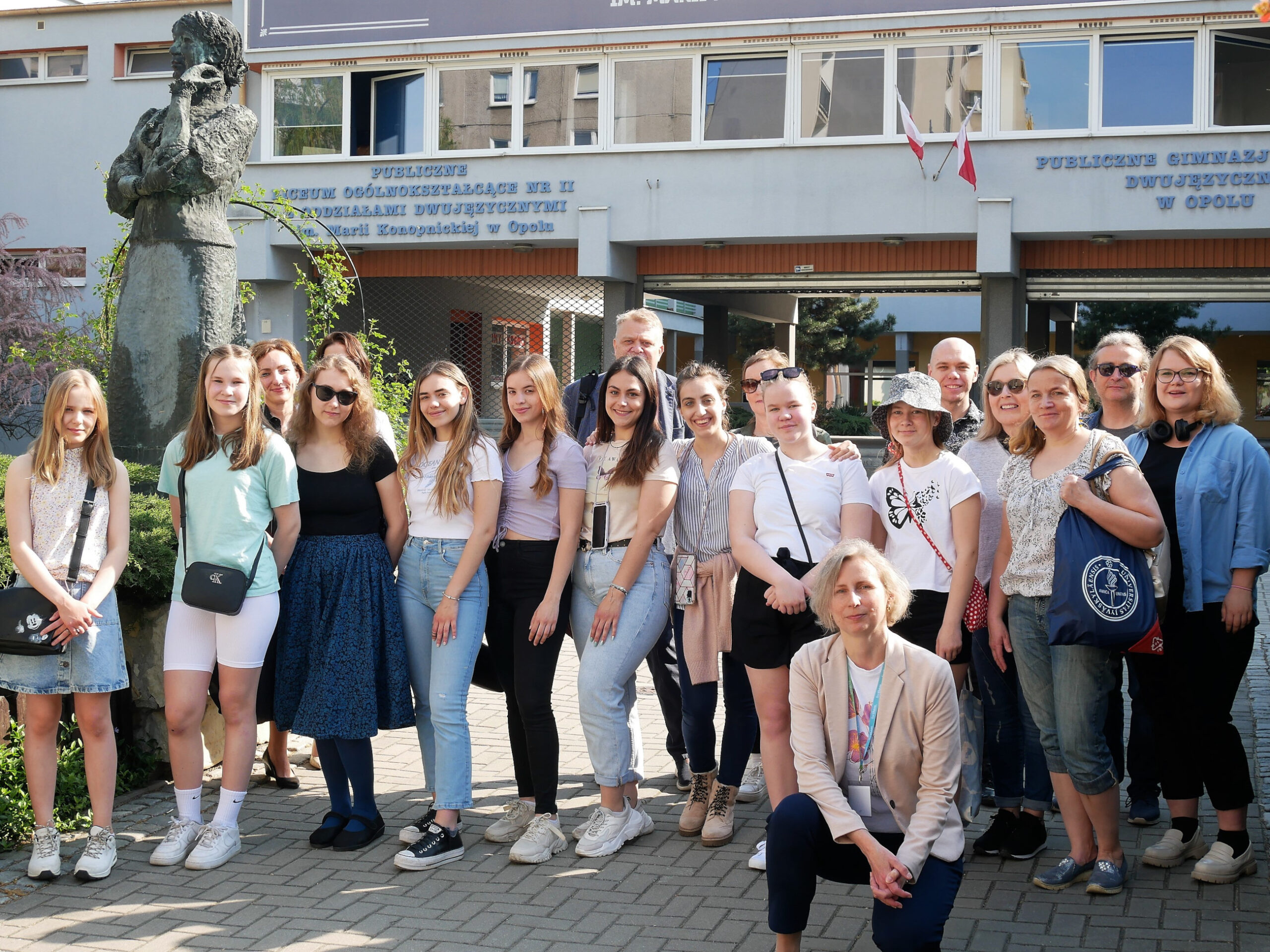
A series of projects (2020–2025) carried out each academic year from 2020/21 onwards in collaboration with the Education Department of Opole City Council and co-funded by small grants from the Mayor of Opole and FIT FORTHEM. Academic supervision: Prof. Katarzyna Molek-Kozakowska, PhD (KJA). The projects aim to train students of the Faculty of Philology to coordinate citizen science projects, which are then carried out in collaboration with secondary schools in Opole (LO1, LO2, LO3, LO5, LO6, LO8, LO9) or volunteers. Citizen science projects involve fieldwork and surveys on linguistic, communicative, cultural, media, and social phenomena, which young people have selected as important research issues.
DisInfoResist

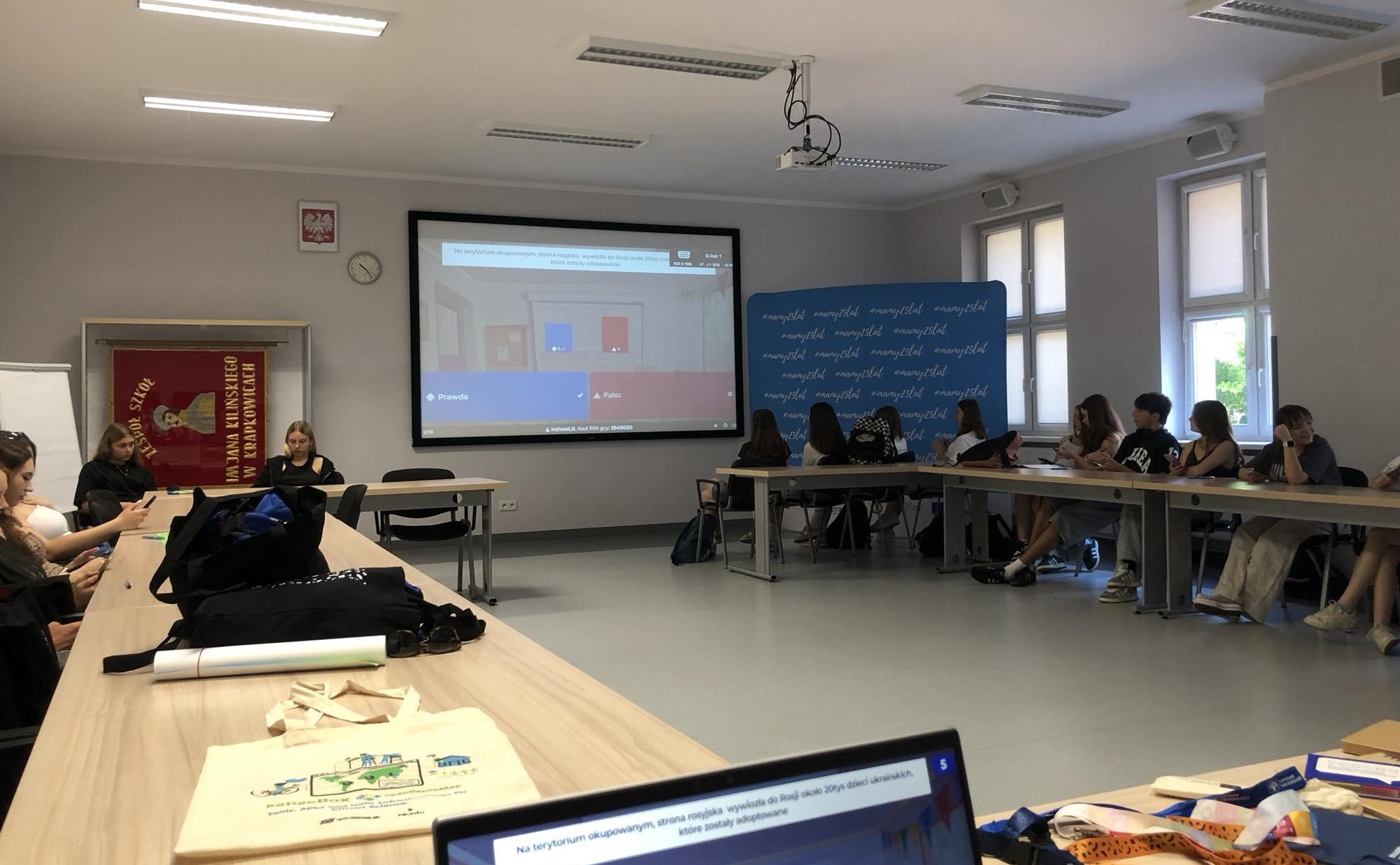
A project involving Master’s students in research and collaboration with the local community (LO in Krapkowice), funded by the FORTHEM Resilience Lab (Resilience, Life Quality and Demographic Change FORTHEM Lab; 2024).

Academic supervision: Prof. Katarzyna Molek-Kozakowska, PhD, University of Opole. The project involved a needs assessment, pilot studies and an intervention tailored to the needs of young people in the Opole region to improve their ability to recognise disinformation related to the Russia-Ukraine conflict.
Go to the project website


CORECON

The project “The coverage and reception of the Russian-Ukrainian conflict in Polish, Romanian and English-language media: A comparative critical discourse study with recommendations for journalism training” (2024–2026) is funded by the Romanian Ministry of Science and administered by the University of Opole’s partner in the FORTHEM Alliance – Lucian Blaga University of Sibiu. Three research groups, including staff from the Institute of Linguistics (Dr Przemysław Wilk, Dr Marcin Deutschmann, Dr Rafał K. Matusiak, Dr Jędrzej Olejniczak, Rober Radziej, MA, and Prof. Katarzyna Molek-Kozakowska, PhD, UO, KJA), are analysing data from media reports in three languages and comparing representations of the war in Ukraine, not only from a military perspective but also in social, economic and political contexts.

See project details and research findings
Alma Mater Leopoliensis. The History of Humanities in Lviv 1661–1946

A project carried out at the Institute of Polish Philology, University of Wrocław, as part of the sixth edition of the National Programme for the Development of the Humanities, comprising documentation and editorial work (compilation of source materials for the database known as the ‘Lviv collection’) and the creation of a three-volume monograph with access to a digital archive and an electronic database of publications on the history of the University of Lviv. Prof. Mirosława Podhajecka, PhD (KJA), is one of the project’s principal investigators. Her contribution to the monograph under preparation concerns the history of English studies in Lviv.

Humour and conflict in the Estonian and Polish public sphere

A comparative project carried out by the Estonian Literary Museum on behalf of the Estonian Academy of Sciences under the supervision of Prof. Liisi Laineste (2024–2026, project no. 8-2/24/2). The research team, including Prof. Dorota Brzozowska, is investigating how humour is used to communicate social issues, such as protest, persuasion, aversion or group cohesion, as well as how humour can provoke hostility and retaliation in public relations and communications.

Neologisms borrowed from English and their penetration into contemporary French

The aim of the project was to analyse English loanwords that have entered modern French. Individual terms were selected from the FranceTerme corpus ( ), which contains Anglicisms from various fields and French terms proposed by the Commission d’enrichissement de la langue française as equivalents of English terms (for example, ‘hashtag’ and its French equivalent ‘mot-dièse’). The main aim of the research was to use the SketchEngine tool to examine the extent to which French equivalents are capable of replacing loanwords from English.


Perceptual Structures in French-Polish Translation

The subject of the research in the project was constructions introduced by a perception verb, and in particular the infinitive clause (ICP), the relative clause (RCP) and the structure ‘que’ + subordinate clause: Paul l’a vu escalader le Mont-Blanc; Paul l’a vu qui escaladait le Mont-Blanc; Paul a vu qu’il escaladait le Mont-Blanc. The work comprised: a) a description of the syntactic, semantic and cognitive properties of perceptual structures in French, with a primary focus on the ICP; b) the development of a typology of various forms of translating the ICP into Polish, taking into account that this structure does not exist in Polish (there are other equivalent forms, for example: jak P; że P; gdy P; kiedy P; etc.); c) the selection and application of appropriate research tools in the analysis of translations of the ICP into Polish; d) adapting the methodology to the linguistic properties of perceptual structures; e) as the accusativus cum infinitivo does not occur in modern Polish, identifying a construction that truly captures the numerous and specific features of ICP; f) from a translation studies perspective, highlighting current trends in the translation of broadly understood perceptual structures.

Language across generations: contact-induced change in morpho-syntax in German-Polish bilingual speech

The project was carried out as part of the BEETHOVEN 2 call for Polish-German research projects in the years 2018–2023; it was funded by the National Science Centre (project no. 2016/23/G/HS2/04369; affiliated with the Institute of Slavic Studies of the Polish Academy of Sciences), as well as by the German Research Foundation (Deutsche Forschungsgemeinschaft, project no. HA 2659/9-1; affiliated with the University of Regensburg [Universitӓt Regensburg]). Its main objective was to build a multimodal corpus of Polish-German bilingualism and to investigate intergenerational differences in language changes caused by language contact.

The corpus comprises approximately 78 hours of recordings in Polish and German featuring 58 representatives of two generations. The first generation consists of people born before 1945 in Germany, in territories annexed to Poland in 1945 (the so-called Polish Generation/Generation Polen, abbreviated GP – from the country of residence). The second generation consists of people also born in these areas, but after 1945, i.e. already in Poland. Representatives of this generation emigrated to Germany and live there (the so-called German Generation/Generation Deutschland, abbreviated GD). The corpus is annotated grammatically and sociolinguistically. Additionally, it has been supplemented with extensive metadata.

Members of the international research team: Prof. Dr Björn Hansen and Prof. Dr Anna Zielińska (project leaders); Aneta Bučková, Dr Carolin Centner, Dr Barbara Alicja Jańczak, Dr Anna Jorroch, Iga Kościołek, Prof. Felicja Księżyk, University of Opole; Prof. Dr Marek Nekula, Dr Irena Prawdzic-Jankowska, Dr Michał Woźniak (researchers) and Prof. Dr Sandra Birzer, Prof. Dr Bernhard Brehmer, Dr Christoph Draxler (consultants).

Go to the corpus page

Skip to content