
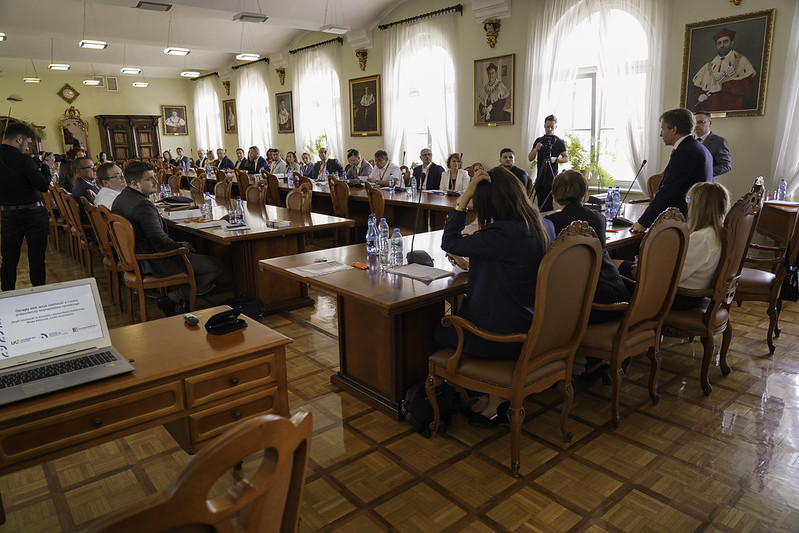
The Opole Language Hub is an initiative by German studies academics at the University of Opole, who have set themselves the goal of creating a platform to support the economy of the Opole Province and Silesia through language skills – primarily in German. The significant role of this language in the region’s economy is repeatedly emphasised by business representatives, and the large number of people with a very good command of the language, including those of German origin who are often bilingual, is one of the key factors determining business locations in the area. However, this distinctive feature of the Opole Province is not a given that will last forever. Various factors have, and may continue to have, a negative impact on interest in learning the language – both within the education system and in families with German roots. This is why it is so important, on the one hand, to raise awareness among parents and their children that knowledge of German is a key factor in employability. On the other hand, the presence of this language in the region strengthens the region’s economy in services and manufacturing, promotes job creation, and helps curb depopulation.
As part of the Opole Language Hub, initiatives are being undertaken – including in cooperation with the education sector, local authorities, business partners and the German minority – to support the promotion and teaching of the German language. The University of Opole has been carrying out such activities for many years, and one of the latest achievements within the Opole Language Hub is the launch of a new practical degree programme, ‘German in Business and Public Communication’. Among the activities promoting the language, it is worth mentioning the implementation of projects by the Opole German Studies Department in collaboration with secondary school pupils from the region, the organisation of Opole German Studies Week, the creation of a virtual space on social media for exchanging information about job opportunities involving the German language, study visits to partner companies that use the language in their day-to-day operations, and the delivery of workshops and training sessions by business specialists.
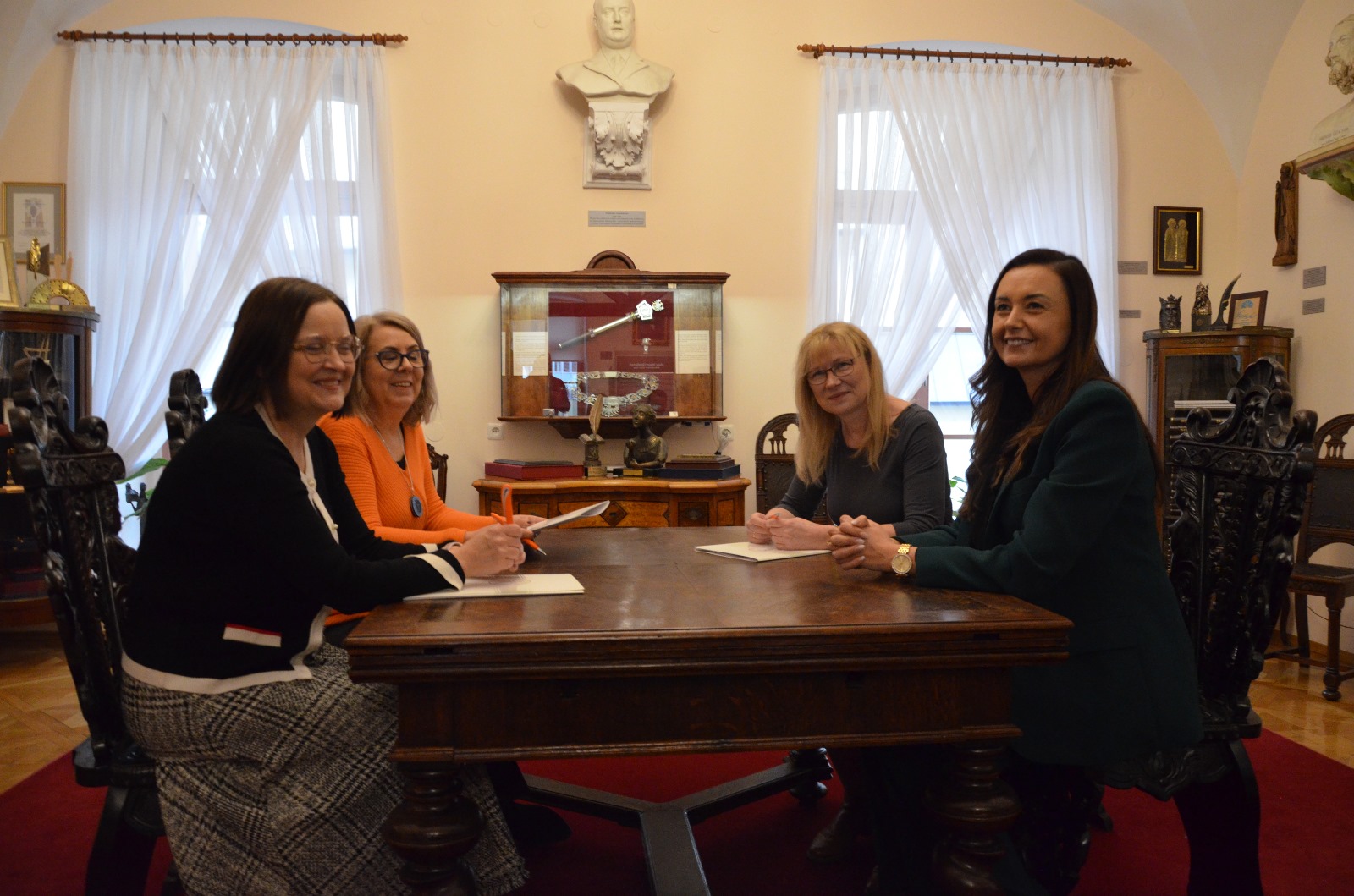
A cooperation agreement between the Institute of Linguistics and the Opole Silesia Museum was signed on 7 December 2022. The main objective of the cooperation was:
As part of the collaboration with the MŚO, students of German Studies at the University of Opole, during their translation module classes, carried out translation projects related to the temporary exhibition “Opole’s Cement Works. Industry in the City’s Structure” and parts of the permanent exhibitions (History of the Museum, Archaeological Department, Historical Department, Tenement House). As part of these projects, descriptions of the aforementioned exhibitions in German were produced for foreign tourists. Students and staff of the German Studies programme have the opportunity to visit the Museum of Opole Silesia free of charge.
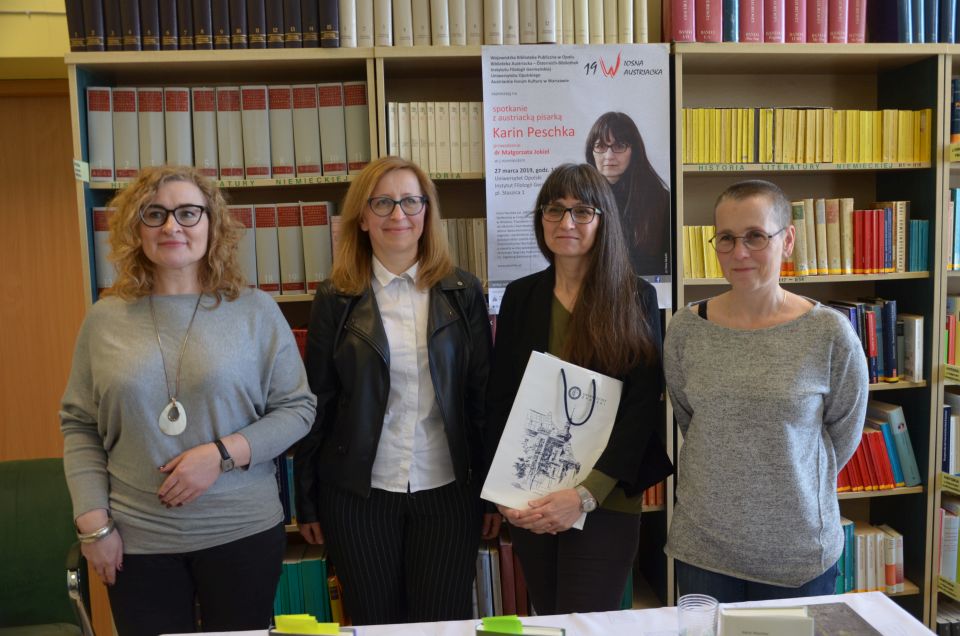
The collaboration between the German Studies Department in Opole and the Provincial Public Library in Opole, which also houses the Austrian Library, has a long-standing tradition. The cooperation between the two institutions formally began in 2012 with the signing of a Memorandum of Understanding between the Provincial Public Library in Opole and the then Institute of German Studies at the University of Opole, which was extended following the restructuring of the University of Opole in 2019. For 10 years now, this agreement has supported academic activities, including conferences and publications, as well as outreach activities such as lectures, author talks, themed exhibitions, projects, and other events. On the part of the German Studies Department at the University of Opole, cooperation with the Library is coordinated in particular by Professor Andrea Rudolph, Dr Gabriela Jelitto-Piechulik and Dr Małgorzata Jokiel.
As part of this collaboration, three conferences were organised, over a dozen lectures were delivered, and three publications were produced. These activities, which promote the German language and culture within the Opole community and the wider region, and in which staff from the University of Opole and the Provincial Public Library/BiblioTeka, as well as German studies students, are involved, are international in nature and are often held with the support of the Austrian Cultural Forum and Dr Edward Wąsiewicz, Honorary Consul of the Republic of Austria in Wrocław. The project currently underway is entitled “Fenster in die junge deutschsprachige Literatur. Österreich. Liechtenstein. Schweiz und Deutschland. Junge Autoren literarisieren ihr Jetzt und Heute: politisch, sozial, ökologisch” and aims to bring socially relevant themes in contemporary German-language literature to the fore.